Rank
Why Did My Website Traffic Suddenly Drop?
Traffic falls off a cliff and nothing looks different. Usually it's technical, usually it's fixable, and usually nobody's looked. Here's where to look.
The Site Rescue starts the moment your order is placed. I’ll email you within one business day, usually much sooner, to get access and book the 30-minute intake call. If the site is under attack right now, call (754) 302-4631 after you pay.
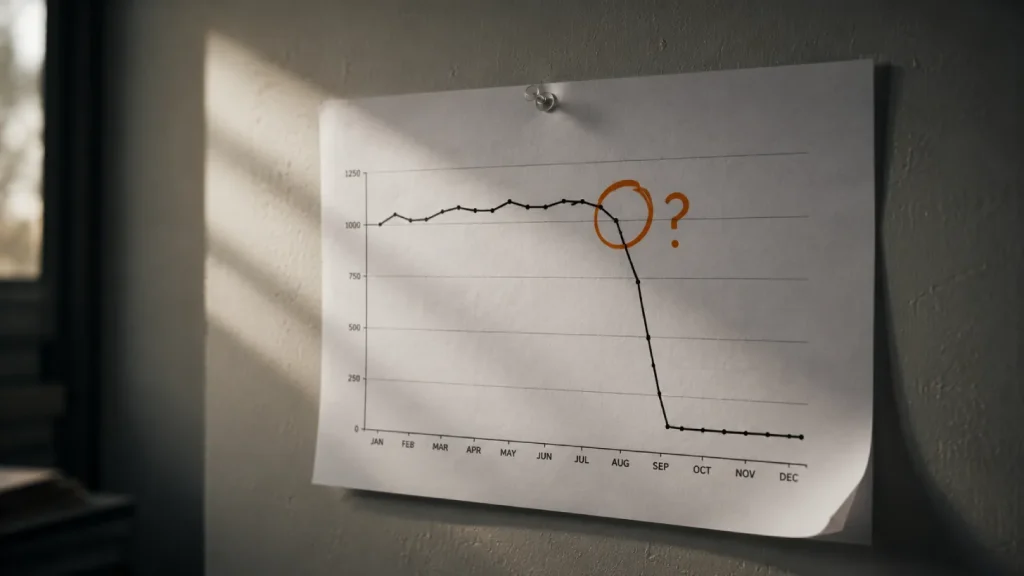
Sudden traffic drops are usually technical, not algorithmic. The common causes are: a change that blocked indexing, broken canonical tags, a botched migration, a manual penalty, or a compromise adding pages you didn't create. Genuine algorithm updates cause gradual decline across a whole category, not a cliff for one site. sosSTEVIE finds the actual cause before recommending anything — because "we were hit by an update" is the story people tell themselves while a fixable problem quietly runs for a year.
Key takeaways
- A cliff is technical. A slope is algorithmic. The shape of the graph tells you which conversation you're in.
- The most common causes are self-inflicted and reversible — usually a setting nobody knew existed.
- "It must have been an update" is the most expensive assumption in this business.
- A site can be completely healthy to every human who looks at it and entirely absent from search.
- If your traffic drop coincides with a site change, that's not a coincidence. It's the answer.
~/rank/seo-technical-audit · drop protocol
Rank · Quoted after the Site Rescue
Why Did My Website Traffic Suddenly Drop?
Traffic falls off a cliff and nothing looks different. Usually it’s technical, usually it’s fixable, and usually nobody’s looked. Here’s where to look.
date the drop --precise
wantedthe week. not “around spring”
changes --weekdeploys · plugin updates · host · redesign · staff · DNS
rule-out compromisefirst. always first
check --manualcoverage · robots.txt · canonicals · 15 min
match cause to datedoesn’t fit the timeline? wrong theory
answer
Sudden traffic drops are usually technical, not algorithmic. The common causes are: a change that blocked indexing, broken canonical tags, a botched migration, a manual penalty, or a compromise adding pages you didn’t create. Genuine algorithm updates cause gradual decline across a whole category, not a cliff for one site. sosSTEVIE finds the actual cause before recommending anything — because “we were hit by an update” is the story people tell themselves while a fixable problem quietly runs for a year.
key takeaways
- A cliff is technical. A slope is algorithmic. The shape of the graph tells you which conversation you’re in.
- The most common causes are self-inflicted and reversible — usually a setting nobody knew existed.
- “It must have been an update” is the most expensive assumption in this business.
- A site can be completely healthy to every human who looks at it and entirely absent from search.
- If your traffic drop coincides with a site change, that’s not a coincidence. It’s the answer.
the story
The most expensive words in this industry: “it must have been an algorithm update.”
I’ve watched people say that sentence and then do nothing for fourteen months. It’s a comforting explanation. It’s out of your control, it’s happening to everyone, it’s the weather. You can’t be blamed for the weather. So you wait for it to pass, and it doesn’t, because it was never weather.
Here’s a real one. A firm lost 70% of their organic traffic across about three weeks and concluded they’d been hit by a core update. They’d read the forums, everyone said the same thing, so they hunkered down and waited it out. Fourteen months of waiting.
What actually happened: a plugin update had changed how their canonicals were generated. Every page on the site was now telling Google “don’t index me, index the homepage instead.”
The site was politely, methodically deleting itself from search, exactly as instructed. Google was doing precisely what it had been asked. Nobody looked, because there was nothing to see. The site looked perfect. It loaded fine. From any human vantage point, a completely healthy website that had simply stopped existing.
It took a morning to fix. Fourteen months to notice.
read the shape of the graph
Before anything else: what shape is the drop?
The shape tells you which room you’re in. Look at it before you buy anything.
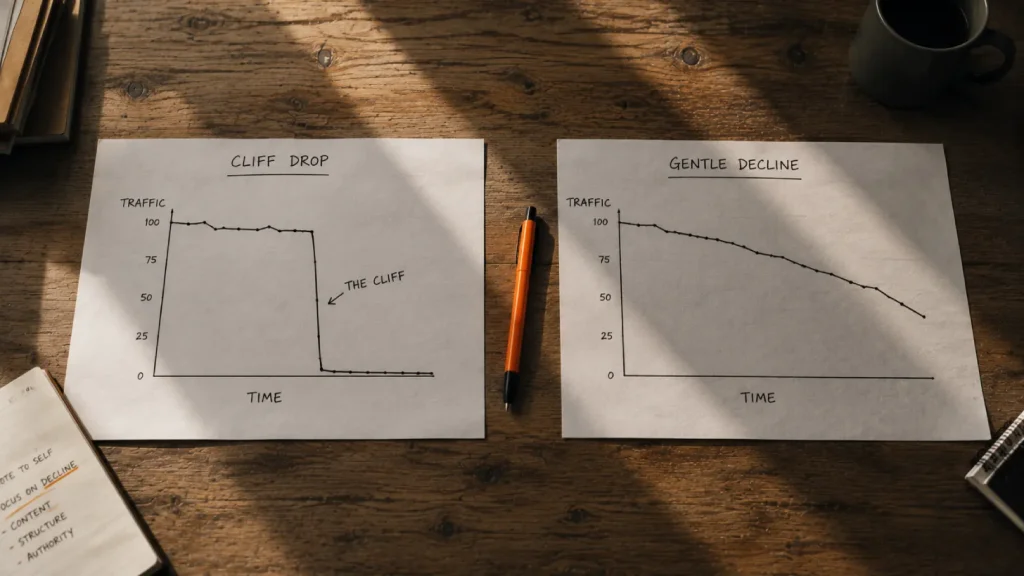
Falls off in days or a couple of weeks, and stays down.
Almost always technical or a penalty. Something happened: something you did, something a plugin did, or something an attacker did. This is good news: it has a cause, and causes can be found and reversed.
Steady decline over months.
Could be algorithmic, could be competitors improving, could be your content going stale, could be buyers moving to AI answers and never opening a results page at all. A strategy conversation, not a bug hunt.
A slope in the data. A cliff in reality.
The worst case, and more common than you’d think.
Most people diagnose a cliff as a slope. They see the drop, reach for “algorithm update,” and start a slow, expensive content programme aimed at a problem that was a broken setting in the CMS.
the five causes
I have never once found a sudden drop that wasn’t on this list.
Four of the five are things that happened, with a date.
You told Google not to index you.
A staging site pushed live with noindex still on. A robots.txt change. A plugin update that rewrote canonicals. The most common cause of catastrophic drops, almost always accidental, and usually a one-line fix. Wonderful or infuriating, depending on how long it ran.
A migration went wrong.
New site, new URLs, no redirects. Or redirects that chain, loop, or point at a 404. Every bit of authority you’d built for a decade, disconnected in an afternoon. Migrations are the highest-risk routine thing anyone does to a website, and they’re consistently under-planned.
A manual action or penalty.
Real, checkable, and nobody checks. Search Console tells you outright, free, in plain English. I regularly find manual actions sitting unread for over a year, in an account nobody logs into, notifying an email address that belongs to a developer who left.
You’ve been compromised.
Spam pages get injected, Google notices, your domain trust collapses. Your traffic dies for reasons that look algorithmic and aren’t. This is what happened to me. My rankings didn’t fall because of an update. They fell because thirty thousand pharmacy pages appeared under my domain and Google drew the obvious conclusion. Check this before you check anything else, because if it’s this, everything else you do is wasted.
Your site got slow or broken on mobile.
A theme update, an unoptimized hero image, a script that hangs. Rarely causes a cliff on its own; frequently the accelerant on a slope.
the single most useful question
What changed the week the traffic fell?
Nine times in ten, somebody knows. They just never connected it, because the change and the consequence didn’t look related.
what ai actually does here
The tools find the anomaly. A person finds the cause.
Let me be honest about this rather than sell you a story.
| AI is genuinely excellent at | AI is useless at | |
|---|---|---|
| scale | Crawling a site at scale and flagging anomalies | Knowing that you migrated hosts in March |
| patterns | Spotting patterns across thousands of URLs no human would review | Knowing that your developer left in April |
| context | Comparing your structure against competitors, sifting log files | Knowing the marketing manager “cleaned up” the sitemap in May |
| errors | Catching the class of error that’s obvious once seen and invisible before | Any fact about your business. No crawler knows any |
Anyone selling you an automated SEO audit is selling you the first half and charging for both. You’ve had one of those PDFs. Forty-seven pages, red triangles, no answer.
I use AI heavily to do in an hour what used to take three days. Then I ask what changed in March. The second question is the one that finds it.
the drop protocol
Seven steps. In order. The date is everything.
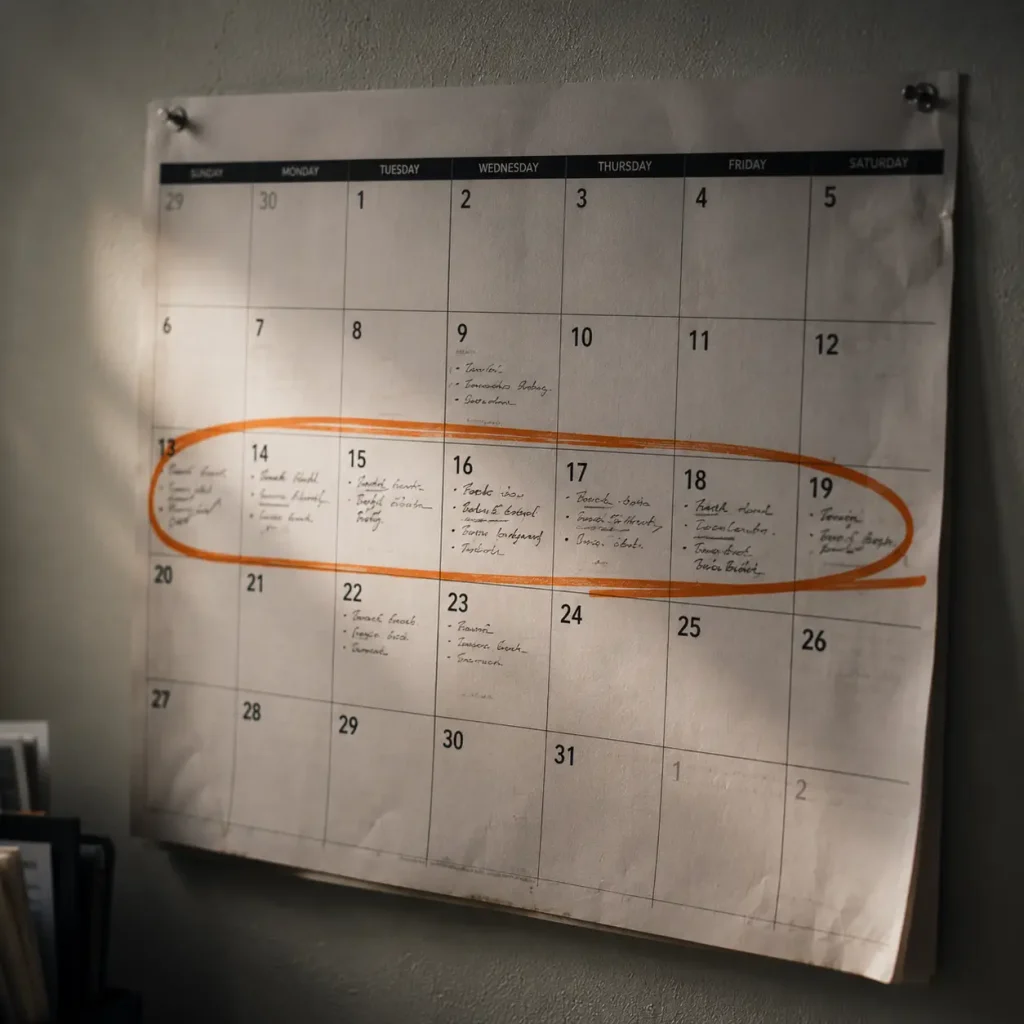
Date the drop precisely.
Not “around spring.” The week. Everything hangs on this.
List what changed that week.
Deployments, plugin updates, host migrations, redesigns, staff departures, DNS changes. Ask everyone, including the person who says nothing changed. Something changed.
Rule out compromise first.
site:yourdomain.com, the Search Console security tab, the admin user list. If you’re hacked, nothing else matters until that’s dealt with. Start here instead.
Check the free stuff nobody checks.
Manual actions. Coverage report. Robots.txt. Canonicals on your top pages. Fifteen minutes, and it solves a startling share of cases at zero cost.
Crawl it properly.
Now bring the tools in: indexability, redirect chains, canonical conflicts, structure. You’re looking for what corroborates the date.
Match cause to date.
The real cause will line up with the week. If your best theory doesn’t fit the timeline, it’s the wrong theory, however much you like it.
Fix, then wait properly.
Recovery isn’t instant even when the fix is. Google has to re-crawl, re-evaluate, re-trust. Weeks, sometimes months. The hardest part of this work is the interval between fixing it and seeing it work.
what anyone can control
The fix is usually fast. The recovery isn’t.
I can find the cause and fix it. I can’t set Google’s schedule, and I won’t pretend to.
in our control
Finding the cause, and fixing it.
- The date. Pinned to the week, from your own data.
- The cause. Matched to that date, not to a theory you like.
- The fix. Usually fast. Often a single setting.
- The free checks. Manual actions, coverage, robots.txt, canonicals, the security tab.
in nobody’s control
Google’s clock.
- Re-crawl and re-trust. Google rebuilds trust on its own schedule.
- How long it takes. Weeks for a noindex caught early. Many months for a long compromise or a severed migration.
- Algorithm updates. They happen to whole sectors, and nobody can stop one.
- A promised recovery date. Anyone promising one is guessing.
what it costs
Diagnose first. The fix is quoted once the cause is known.
start here · the sos digital diagnostic
Find out what actually happened.
One fixed price. I find what’s wrong, fix what’s causing the damage, and tell you plainly what’s left. If anything beyond $997 is needed, you’ll see the scope and the cost first.
the audit and the fix
AI-driven SEO and technical audit.
- The full Drop Protocol, run against your data
- A proper crawl: indexability, redirects, canonicals, structure
- Cause matched to date, then fixed
frequently asked questions
The questions people ask after the drop.
Why did my website traffic suddenly drop?
If it fell off a cliff over days or weeks, it’s almost certainly technical rather than algorithmic — most often an accidental noindex, broken canonical tags, a botched migration, a manual penalty, or a compromise. Real algorithm updates produce gradual decline across a whole category of sites, not a cliff for one. Start by dating the drop precisely and listing everything that changed that week.
Was I hit by a Google algorithm update?
Probably not, if the drop was sudden and specific to you. Algorithm updates are widely reported, affect many sites in a sector at once, and typically produce a slope rather than a cliff. “It must have been an update” is the most expensive assumption in this industry because it’s unfalsifiable and it justifies doing nothing. Check the technical causes first — they’re fixable, and updates aren’t.
How do I check if Google has penalised my site?
Google Search Console tells you directly, free, in the Manual Actions section, in plain English. Most business owners have never looked, and I regularly find actions sitting unread for a year in an account nobody logs into. If there’s nothing there, you haven’t been penalised — which is genuinely useful to know, because it redirects you to the real cause.
My site looks completely fine. Can it still have a serious SEO problem?
Yes, and this is the central trap. A site can render perfectly for every human who visits while telling search engines not to index a single page. The visitor experience and the crawler experience are different things, and nothing on your screen reports the difference. My own site looked immaculate while it was being deleted from search, and I found out from the silence.
How long does recovery take after you fix the problem?
It depends on the cause and how long it ran. A noindex caught in a fortnight can recover in weeks once removed. A compromise that ran for months, or a migration that severed years of authority, can take many months, because Google has to re-crawl and rebuild trust on its own schedule. The fix is usually fast. The recovery isn’t, and anyone promising otherwise is guessing.
also in rank
Get found again, everywhere it matters.
somebody has to look
Date the drop. List what changed. Look.
That firm waited fourteen months for weather that was never coming, while their site quietly followed the instruction it had been accidentally given. Nobody looked, because there was nothing to see. That’s not incompetence. It’s just what invisible failures are like.
One fixed price. I find what’s wrong, fix what’s causing the damage, and tell you plainly what’s left. If anything beyond $997 is needed, you’ll see the scope and the cost first.
About Stevie
My traffic didn’t drop because of an algorithm update. It dropped because someone else was publishing thirty thousand pages under my domain and Google drew the obvious conclusion. My site looked completely normal in my browser the whole time. It took me weeks to work that out, and by then it was too late. I had to take the whole thing down.
I don’t accept “it must have been an update” any more. There’s always a cause. It always has a date. I diagnose before I quote, because I know exactly what it costs to be certain about the wrong thing. The whole story is here.
sosSTEVIE: for when your digital presence is broken, invisible, or about to be.
Frequently asked questions
Why did my website traffic suddenly drop?
If it fell off a cliff over days or weeks, it's almost certainly technical rather than algorithmic — most often an accidental noindex, broken canonical tags, a botched migration, a manual penalty, or a compromise. Real algorithm updates produce gradual decline across a whole category of sites, not a cliff for one. Start by dating the drop precisely and listing everything that changed that week.
Was I hit by a Google algorithm update?
Probably not, if the drop was sudden and specific to you. Algorithm updates are widely reported, affect many sites in a sector at once, and typically produce a slope rather than a cliff. "It must have been an update" is the most expensive assumption in this industry because it's unfalsifiable and it justifies doing nothing. Check the technical causes first — they're fixable, and updates aren't.
How do I check if Google has penalised my site?
Google Search Console tells you directly, free, in the Manual Actions section, in plain English. Most business owners have never looked, and I regularly find actions sitting unread for a year in an account nobody logs into. If there's nothing there, you haven't been penalised — which is genuinely useful to know, because it redirects you to the real cause.
My site looks completely fine. Can it still have a serious SEO problem?
Yes, and this is the central trap. A site can render perfectly for every human who visits while telling search engines not to index a single page. The visitor experience and the crawler experience are different things, and nothing on your screen reports the difference. My own site looked immaculate while it was being deleted from search, and I found out from the silence.
How long does recovery take after you fix the problem?
It depends on the cause and how long it ran. A noindex caught in a fortnight can recover in weeks once removed. A compromise that ran for months, or a migration that severed years of authority, can take many months, because Google has to re-crawl and rebuild trust on its own schedule. The fix is usually fast. The recovery isn't, and anyone promising otherwise is guessing.
Also in Rank
Stop guessing.
One diagnosis. Find it, fix it, get back online. Small and medium sites are usually fully recovered within the $997.
The Site Rescue starts the moment your order is placed. I’ll email you within one business day, usually much sooner, to get access and book the 30-minute intake call. If the site is under attack right now, call (754) 302-4631 after you pay.
The Backstory
Two years ago my own website was taken over. It looked completely normal in my browser while tens of thousands of spam pages ran underneath it. I found out when the calls stopped, and I had to take the whole thing down.
I diagnose before I quote, because I know exactly what it costs to be certain about the wrong thing. The whole story is here.